
Research and insights
Data tells one story. People tell another. Together, they show us the truth about racism in Australia and how to change it.
The Importance of This Research
The Equity Institute supports research examining racism, discrimination and social inclusion in Australia.
Research activities draw on data from initiatives such as the Racism Register as well as collaboration with academic and community partners.
This work contributes to informed discussion about racism and supports evidence-based responses to discrimination.
The institute welcomes collaboration with researchers, universities and community organisations interested in contributing to this work.
Insights from the data
Where and how discrimination occurs
Discrimination shapes lives across three critical domains. In workplaces, schools, and public spaces, people encounter barriers that limit opportunity and diminish belonging. Our research captures both the scale of the problem and the voices of those living it.
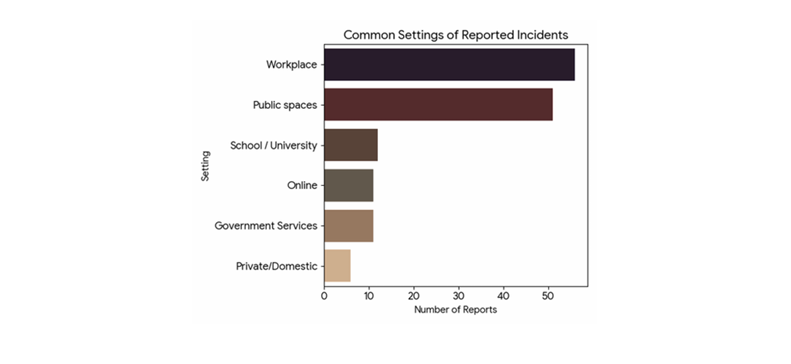
37.4%Workplace discrimination
Many incidents occur in professional environments, where individuals face exclusion, bias, and unfair treatment.
35.4%Public space incidents
Racism is frequently experienced in everyday public settings, affecting people’s sense of safety and belonging.
Education barriers
Students report assumptions, exclusion, and unequal opportunities within schools and learning environments.
1 in 3
Systemic exclusion
Workers report discrimination affecting career progression and their sense of belonging in professional environments.
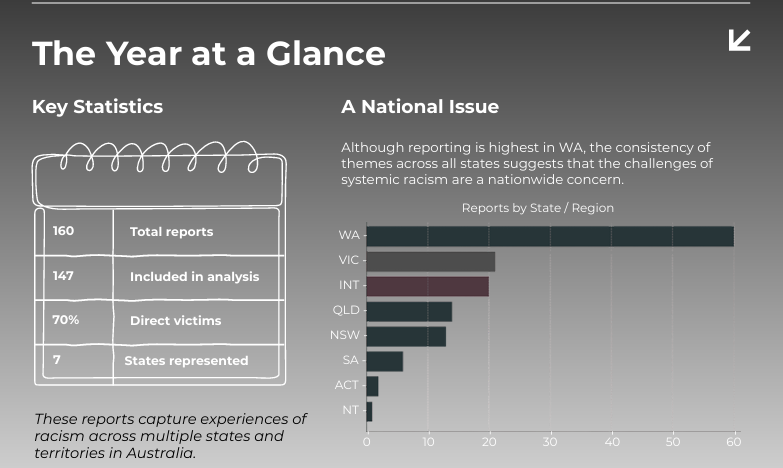
Reports by State / Region
Reporting is highest in Western Australia, but consistent patterns across all states show that racism is a nationwide issue.
Racism Occurs AcrossEveryday Environments
Reporting is highest in Western Australia, but consistent patterns across all states show that racism is a nationwide issue.
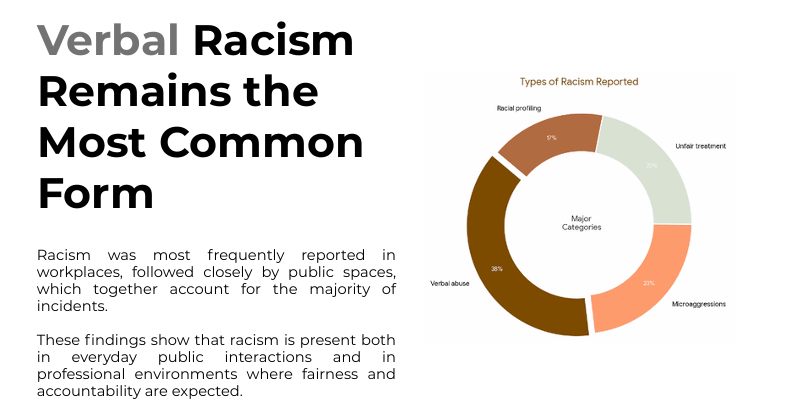
Forms of racism reported
Verbal abuse is the most common form, alongside microaggressions, unfair treatment, and racial profiling.
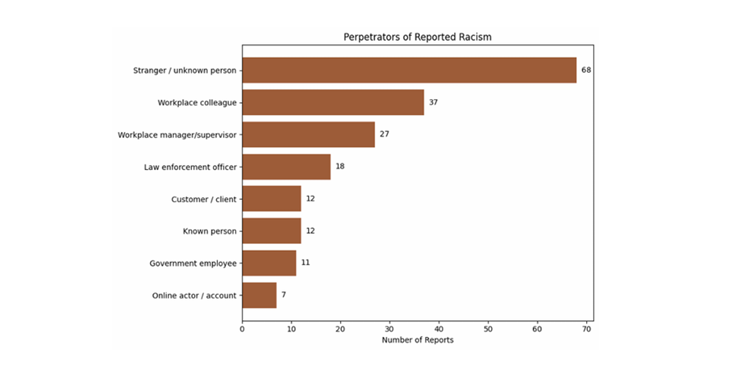
Who is involved in reported incidents
Incidents involve both strangers and individuals within institutional settings, highlighting the widespread nature of discrimination.
About the data
Full Report 2025-2026
We respect your privacy and handle data responsibly.
DownloadShare
The data used in this report were collected through the Racism Register’s online survey, administered via Type form. The survey allows individuals to report their experiences of racism across Australia.
This report is based on responses collected during the 2025 reporting period. There were a total of160 responses, of which 147 are valid and included in the analysis. Responses were classified as valid, partial, or invalid based on completeness and relevance. Clearly incomplete or nonmeaningful responses were excluded from analysis, while partial responses were retained where they contributed to understanding patterns of racism.
Participation in the survey is voluntary, and responses are submitted anonymously. Respondents can choose which questions to answer and how much detail to provide. All data in this report side-identified and based on voluntary, self-reported experiences.
The dataset includes the following information reported by respondents:
+ Location: Information about where respondents are based (e.g. state or country). The analysis in this report focuses on incidents that occurred in Australia. A small number of responses from outside Australia were excluded from the main analysis but retained for context.
+ Setting: Where the incident occurred, grouped into categories such as public spaces, workplaces, schools and universities, government services, and online spaces. Service-based interactions, including car rental services, were grouped under institutional or service settings due to the structured nature of the interaction and power dynamics involved.
+ Type of racism: The form of racism experienced, including categories such as verbal abuse, discrimination, microaggressions, and physical abuse.
+ Perpetrator: Information about who was responsible for the incident, based on both structured survey responses and written descriptions.
Descriptions of incidents: Open-text responses describing what happened, providing context and detail about each experience.
+ Limitations: This dataset has several important limitations:
+ Underreporting: Not all incidents of racism are reported. The data reflects only those who chose to submit their experiences.
+ Self-reported data: All responses are based on individuals’ own accounts and perspectives.
+ Incomplete responses: Some respondents did not answer all questions or provided limited detail.

Stay connected to real stories and change
Keep Acknowledgement of country
Equity Institute Limited
Australian Company Number 684 587 111
Public company limited by guarantee.
© 2026 Equity Institute. All rights reserved.